Find the Perfect Product within Seconds

Batteries Store

Favorites Products

Hot Selling

Duracell 9v 12 Pack
Duracell 9v 12 Pack
Duracell AA and AAA 24 Pack
Duracell C and D 12 Pack

Blogs

How Long Do Mobility Scooter Batteries Last? Complete Guide for Canada

Mobility Scooter Batteries usually last between one and five years, depending on the battery type and how well you care for it. However, Canadian winters can shorten that lifespan significantly. Cold temperatures, salt exposure, and improper charging all take a toll on battery health.

If you rely on a mobility scooter for daily independence, understanding your battery's lifespan matters. A failing battery means reduced range, slower speeds, and the risk of being stranded. This guide explains exactly how long Mobility Scooter Batteries last, what affects their lifespan, and how to choose the right replacement for Canadian conditions.

What Are Mobility Scooter Batteries?

Mobility Scooter Batteries are rechargeable power sources that supply energy to electric mobility scooters and power wheelchairs. Most scooters use two 12-volt batteries wired together to create a 24-volt system.

These batteries store energy from a wall charger and release it steadily to the scooter's motor. Therefore, battery health directly affects speed, range, and overall reliability.

Three main battery types power mobility scooters in Canada today. These are sealed lead-acid (SLA), gel, and lithium-ion (LiFePO4) batteries. Each type has a different expected lifespan and performs differently in cold weather.

Average Lifespan of Mobility Scooter Batteries 

The lifespan of Mobility Scooter Batteries varies widely by chemistry. Knowing these differences helps you plan ahead and budget for replacement.

SLA (Sealed Lead-Acid) Battery Lifespan

SLA batteries are the most common type found in entry-level and mid-range mobility scooters. They typically last 12 to 18 months with regular use.

However, frequent deep discharging or cold exposure can shorten this further. SLA batteries are affordable upfront but often need yearly replacement for daily riders.

Gel Battery Lifespan

Gel batteries last slightly longer than standard SLA batteries, typically 18 to 24 months. They also tolerate vibration and partial discharge better.

Gel batteries remain a popular mid-range choice for Canadian riders who want better durability without the higher cost of lithium technology.

Lithium Battery Lifespan

Lithium batteries for mobility scooters last considerably longer, often 5 to 10 years or 5,000 or more charge cycles. They also hold capacity better in cold weather than lead-acid options.

Although lithium batteries cost more initially, their extended lifespan and consistent performance often make them the better long-term investment.

Battery Type
Average Lifespan
Typical Charge Cycles
Cold Weather Performance
SLA (Sealed Lead-Acid)
12–18 months
200–300 cycles
Poor below 0°C
Gel
18–24 months
300–500 cycles
Fair below 0°C
Lithium (LiFePO4)
5–10 years
5,000+ cycles
Good with BMS protection

What Factors Affect How Long Mobility Scooter Batteries Last?

Several everyday habits influence how long your Mobility Scooter Batteries actually last. Understanding these factors helps you avoid premature battery failure.

Charging Habits

Overcharging and undercharging both shorten battery life. Therefore, always charge your scooter fully after each use, and avoid leaving it on the charger for days at a time.

Most manufacturers recommend charging for 8 to 12 hours after each ride. Skipping regular charges causes sulfation, which reduces battery capacity permanently in lead-acid types.

Temperature and Canadian Winters

Cold weather is one of the biggest threats to Mobility Scooter Batteries in Canada. Battery capacity can drop by 10 to 20 percent for every 10°C decrease in temperature.

On a -20°C day in Calgary or Winnipeg, a battery that normally provides 20 km of range might only deliver 12 to 14 km. This makes cold-weather planning essential for safety.

Canadian Winter Tip: Mobility Scooter Batteries perform best between 15°C and 25°C. Bring your scooter indoors overnight whenever possible to protect battery health.

Riding Frequency and Distance

Daily riders place more strain on their batteries than occasional users. Longer trips also cause deeper discharge cycles, which wear down lead-acid batteries faster.

However, lithium batteries handle frequent deep discharge much better, making them ideal for riders who use their scooter every day.

Storage Conditions

Improper storage during winter months or extended periods of non-use can severely damage Mobility Scooter Batteries. A fully discharged lead-acid battery left in freezing temperatures may freeze permanently.

Always store your scooter battery at roughly 50 percent charge in a temperature-controlled space if it will sit unused for several weeks.

Signs Your Mobility Scooter Batteries Need Replacement

Recognizing battery failure early prevents being stranded unexpectedly. Watch for these common warning signs.

  • Reduced Range: Your scooter no longer travels as far on a full charge as it once did.
  • Slower Speed: The scooter feels sluggish, especially going uphill or carrying extra weight.
  • Longer Charging Times: The battery takes noticeably longer to reach a full charge than before.
  • Battery Indicator Drops Quickly: The charge level falls rapidly after leaving home, even with light use.
  • Swelling or Corrosion: Visible damage to the battery casing or terminals signals it is time to replace it immediately.

If you notice two or more of these signs, it is time to consider a mobility scooter battery replacement before the battery fails completely.

Lithium Batteries for Mobility Scooters: Are They Worth It?

Lithium batteries for mobility scooters have become increasingly popular among Canadian riders. They weigh roughly half as much as lead-acid batteries of the same capacity.

Lithium batteries also charge faster, often reaching a full charge in 3 to 5 hours instead of 8 to 12. This makes them convenient for riders who use their scooter multiple times per day.

Additionally, lithium batteries maintain more consistent power output as they discharge. This means your scooter will not slow down noticeably as the battery level drops, unlike lead-acid batteries.

Important: Always consult your scooter's manual or manufacturer before switching to lithium. While many scooters accept a simple drop-in replacement, some models are not compatible with lithium chemistry.

Despite the higher upfront cost, lithium batteries often work out cheaper over time. A single lithium battery can outlast four or five SLA replacements, reducing both cost and inconvenience.

Mobility Scooter Battery Replacement: A Step-by-Step Guide

Replacing your Mobility Scooter Batteries is usually straightforward. Follow these steps for a safe and successful replacement.

Step 1: Identify Your Battery Specifications

Check your current battery for voltage, amp-hour rating, and terminal type. Most scooters use two 12V batteries, commonly in 12Ah, 18Ah, 22Ah, 35Ah, or 55Ah capacities.

Step 2: Choose a Matching Replacement

Always replace both batteries at the same time, even if only one has failed. Mismatched batteries charge unevenly and wear out faster as a pair.

Step 3: Power Off and Disconnect Safely

Turn off your scooter completely before disconnecting any battery terminals. Note the wiring order or take a photo before removing the old batteries.

Step 4: Remove and Replace

Carefully remove the old batteries from the compartment. Install the new batteries in the same orientation, then reconnect the terminals in the correct order.

Step 5: Charge Fully Before First Use

Charge your new batteries fully before taking your first ride. This initial full charge helps establish proper battery performance from the start.

Need help with installation? Visit Batteries Store in-store for free assistance fitting your new mobility scooter batteries correctly and safely.

How to Extend the Life of Your Mobility Scooter Batteries

A few simple habits can add months or even years to the life of your Mobility Scooter Batteries.

  • Charge after every ride: Avoid letting the battery sit fully discharged overnight.
  • Avoid deep discharge: Try not to run the battery below 20 percent capacity regularly.
  • Keep terminals clean: Wipe away corrosion and apply dielectric grease, especially after winter riding.
  • Store at moderate temperature: Keep your scooter indoors during extreme cold whenever possible.
  • Use the correct charger: Always use the charger designed for your specific battery chemistry.

Following these habits consistently helps maximize both performance and lifespan, regardless of which battery type you choose.

Mobility Scooter Battery Cost in Canada

Mobility Scooter Battery cost varies depending on capacity and chemistry. SLA and gel batteries are generally more affordable upfront, while lithium batteries carry a higher initial price.

Battery Type
Typical Price Range (CAD)
Expected Lifespan
Best For
SLA 12Ah–22Ah
$70 – $130
12–18 months
Light, occasional riders
SLA/Gel 35Ah–55Ah
$140 – $220
18–24 months
Daily, longer-range riders
Lithium (LiFePO4)
$400 – $900+
5–10 years
Frequent riders, year-round use

Although lithium batteries cost more initially, their longer lifespan often results in lower total cost over five to ten years compared to repeatedly replacing SLA batteries.

Conclusion

Understanding how long Mobility Scooter Batteries last helps you plan ahead and avoid unexpected breakdowns. SLA and gel batteries offer affordable short-term solutions, while lithium batteries provide superior longevity and cold-weather performance.

For Canadian riders facing harsh winters, choosing the right battery type and following proper charging and storage habits makes a significant difference. Your mobility scooter represents independence, and a reliable battery keeps that independence intact through every season.

Visit Batteries Store today to explore our full range of Mobility Scooter Batteries, including SLA, gel, and lithium options. Our team can help you find the right replacement and ensure it is installed correctly, so you can keep moving with confidence.

Frequently Asked Questions About Mobility Scooter Batteries


How long do mobility scooter batteries last on average?

Most Mobility Scooter Batteries last between 1 and 2 years for SLA and gel types, while lithium batteries can last 5 to 10 years with proper care.

Can I use lithium batteries in any mobility scooter?

Not always. Some older scooters are not designed for lithium chemistry. Always check with the manufacturer or a battery specialist before upgrading.

How often should I charge my mobility scooter battery?

Charge your battery after every ride, even short trips. Regular charging prevents sulfation and helps maintain consistent capacity over time.

Why does my mobility scooter battery die faster in winter?

Cold temperatures reduce a battery's chemical reaction rate, which lowers available capacity. This effect is more pronounced in lead-acid batteries than in lithium batteries.

Should I replace one battery or both at the same time?

Always replace both batteries together. Pairing an old battery with a new one causes uneven charging, which shortens the lifespan of both.

How do I know when my mobility scooter needs a battery replacement?

Watch for reduced range, slower speed, longer charging times, and a charge indicator that drops quickly. These signs typically mean it is time for a mobility scooter battery replacement.

Signs Your Car Battery Will Fail Soon: 9 Warning Signs


The clearest Battery Warning Signs are a slow engine crank, a dashboard battery light, dim headlights, and a clicking sound when you turn the key. These signals usually appear days or weeks before a complete car battery fail, giving you time to act.

Most drivers ignore these symptoms until they are stranded in a parking lot or driveway. However, learning to recognize early battery warning signs can save you from an inconvenient breakdown, especially during harsh Canadian winters. This guide covers every major warning sign, explains why it happens, and shows you exactly what to do next.

What Are Battery Warning Signs?

Battery Warning Signs are the physical, electrical, or visual symptoms that signal a car battery is weakening. They appear because a failing battery struggles to hold or deliver a full charge.

These signs range from subtle changes in engine cranking speed to obvious dashboard alerts. Therefore, learning to spot them early helps you avoid a sudden car battery fail at the worst possible moment.

Below, we break down the most common battery warning signs in the order most drivers typically notice them.

1. Slow Engine Crank: The Earliest Battery Warning Sign

A slow or sluggish crank is often the very first sign of battery trouble. Instead of starting instantly, your engine takes a second or two longer to turn over.

This happens because a weakening battery cannot deliver enough Cold Cranking Amps (CCA) to spin the starter motor at full speed. Also, this symptom becomes far more noticeable in cold weather, when battery chemistry naturally slows down.

For example, a battery that cranks normally in summer may struggle every morning once temperatures drop below freezing. If you notice this pattern, your battery is likely nearing the end of its life.

Also Read: What Is Cold Cranking Amps (CCA) & Why It Matters in Canada

2. Dashboard Battery Warning Light

Most modern vehicles include a dedicated battery warning light shaped like a small battery icon. This light illuminates when your vehicle's charging system detects abnormal voltage.

However, this light does not always mean the battery itself is bad. It can also indicate a failing alternator or a loose connection. Therefore, a proper diagnostic test is the only way to confirm the actual cause.

Quick Tip: If your battery warning light stays on continuously while driving, get your battery and charging system tested as soon as possible. Continuing to drive can drain your battery completely.

3. Dim or Flickering Headlights and Interior Lights

Dim or flickering headlights are a classic car battery warning sign, especially when idling at a stoplight. A healthy battery maintains consistent voltage to your entire electrical system.

As a battery weakens, it cannot supply steady power to lights, dashboard displays, and interior lighting. Consequently, you may notice headlights brightening as you accelerate and dimming again at idle.

This flickering pattern indicates the battery is struggling to keep up with your vehicle's electrical demand, particularly when the alternator is not actively recharging it.

4. Clicking Sound When You Turn the Key

A rapid clicking sound when turning the key is one of the most recognisable battery warning signs. This noise comes from the starter relay engaging and disengaging repeatedly.

Essentially, the battery has just enough power to activate the starter solenoid but not enough to actually turn the engine. This is often called a "dead click" and signals an imminent car battery fail.

If you hear this sound, your battery likely needs immediate testing or replacement, especially if it has not been changed in three or more years.

5. Electrical Issues: Power Windows, Radio, and Accessories Acting Up

A weakening battery often affects accessories before it affects the engine. Power windows may move more slowly than usual, and the radio or infotainment system may reset unexpectedly.

Also, dashboard clocks and digital displays sometimes flicker or reset themselves when battery voltage drops below normal operating levels.

These small electrical glitches are easy to dismiss. However, when several issues appear together, they usually point to a battery that can no longer maintain stable voltage under load.

6. Swollen or Bloated Battery Case

A swollen or bloated battery case is a serious and often overlooked warning sign. This happens when excessive heat or overcharging causes gas buildup inside the battery.

The plastic casing bulges outward as internal pressure increases. This deformation permanently damages the internal plates and significantly increases failure risk.

If you notice any swelling, replace the battery immediately. A swollen battery can leak acid or, in rare cases, rupture.

7. Corrosion Around the Battery Terminals

White, blue, or greenish corrosion around the battery terminals restricts the flow of electricity. This buildup forms when hydrogen gas escapes from the battery and reacts with moisture in the air.

Corroded terminals create poor electrical contact, making your battery seem weaker than it actually is. Therefore, always clean terminals before assuming the battery itself has failed.

That said, frequent or heavy corrosion can also indicate the battery is overcharging or nearing the end of its service life.

8.Rotten Egg Smell Near the Battery

A sulfur or rotten egg smell near your battery signals a leak or internal damage. This odor comes from hydrogen sulfide gas escaping a damaged or overcharged battery.

This is one of the more serious battery warning signs because it often accompanies battery leakage. If you notice this smell, avoid direct contact with the battery and have it inspected immediately.

9. Old Battery Age: The Hidden Warning Sign

Battery age is a warning sign that exists quietly in the background. Even a battery showing no obvious symptoms can fail suddenly once it passes its expected lifespan.

Most car batteries last three to five years, depending on usage patterns, climate, and charging habits. Canadian winters tend to shorten this lifespan due to repeated cold-weather strain.

How Old Is Too Old?

If your battery is more than three years old, start testing it regularly. Once it passes the four-year mark, treat any other warning sign on this list as urgent rather than minor. 

Most batteries include a manufacture date code stamped on the case. Checking this date takes only a few seconds and gives you a clear sense of remaining battery life.

Car Battery Fail in Cold Weather: Why Canadian Winters Are Brutal on Batteries

Cold weather is the leading cause of sudden car battery fail across Canada. At -18°C, a battery loses roughly 35 percent of its strength. At -29°C, that number climbs to nearly 60 percent.

Meanwhile, cold engine oil thickens, requiring even more power from the battery to turn the engine over. This combination puts double the strain on an already weakening battery.

Consequently, batteries that seemed fine in October often fail without warning during the first deep freeze of January. Testing your battery before winter arrives is one of the smartest preventative steps Canadian drivers can take.

Also Read Here : Car Battery Dies Overnight in Cold Weather? Guide for Canadian Drivers

Temperature
Approximate Battery Strength Remaining
Engine Starting Difficulty
0°C
~90%
Minimal
-18°C
~65%
Noticeable
-29°C
~40%
Severe

How to Test for Battery Warning Signs Yourself

You can check for early battery warning signs at home using a simple digital multimeter. Set the multimeter to DC voltage and connect the probes to the battery terminals.

A fully charged battery should read between 12.6V and 12.8V at rest. A reading below 12.4V suggests the battery is undercharged or weakening.

However, voltage alone does not always reveal the full picture. A professional load test or conductance test measures how the battery performs under real starting conditions, offering a more accurate diagnosis.

Batteries Store offers free in-store battery testing using professional conductance testers. This test takes just a few minutes and gives you a clear pass or fail result.

What to Do When You Notice Battery Warning Signs

First, avoid panicking. Most battery warning signs give you days or even weeks of advance notice before a complete failure.

Next, get your battery tested as soon as possible. A proper test reveals whether the issue is the battery itself, the alternator, or a loose connection.

If the battery fails the test, replace it promptly rather than waiting for a more convenient time. Driving on a failing battery risks leaving you stranded, especially in cold weather.

Finally, consider your vehicle's specific battery group size and Cold Cranking Amp requirements when choosing a replacement, particularly if you live in a region with harsh winters.

How to Prevent a Car Battery Fail Before It Happens

Prevention is always easier than dealing with a dead battery on a cold morning. A few simple habits can significantly extend battery life.

  • Test your battery every fall: Catch weakening batteries before winter arrives.
  • Clean terminals regularly: Remove corrosion to maintain strong electrical contact.
  • Limit short trips: Frequent short drives prevent the alternator from fully recharging the battery.
  • Turn off accessories before starting: Reduce the load placed on the battery during ignition.
  • Replace batteries proactively: Do not wait for a complete failure once a battery passes four years of age.

Conclusion

The fastest way to avoid a car battery fail is to act the moment you notice any battery warning signs, rather than waiting for a complete breakdown. Slow cranking, dim lights, clicking sounds, and dashboard alerts all provide valuable early notice.

Canadian winters make battery health even more critical, as cold temperatures can turn a weak battery into a dead one overnight. Therefore, regular testing, especially before winter, remains one of the simplest ways to stay protected.

Visit Batteries Store today for a free professional battery test and expert guidance on choosing the right replacement battery for your vehicle. Catching battery warning signs early means fewer surprises and more reliable starts, no matter how cold it gets.

Frequently Asked Questions About Battery Warning Signs

What is the most common early battery warning sign?

A slow engine crank is usually the earliest and most common battery warning sign. It appears before most other symptoms become noticeable.

Can a car battery fail without any warning signs?

Yes, although it is uncommon. Sudden failure usually happens when an aging battery experiences an additional stress, such as extreme cold or a parasitic electrical drain.

How long does a car battery last before it needs replacing?

Most car batteries last three to five years. However, harsh Canadian winters often shorten this lifespan to closer to three years for batteries used in extreme cold.

Does a battery warning light always mean the battery is bad?

Not always. The light can also indicate a failing alternator, a loose connection, or a wiring issue. A professional test confirms the actual cause.

Can I jump-start a car showing battery warning signs?

Yes, a jump start can get you moving temporarily. However, this is a short-term fix. Have the battery tested and replaced if needed as soon as possible.


Best Mobility Scooter Batteries for Canadian Weather


If you own a mobility scooter in Canada, you already know how brutal the winters can be. Temperatures in cities like Calgary, Winnipeg, and Toronto regularly drop well below freezing. This kind of cold puts enormous strain on your scooter's power source. Choosing the right mobility scooter batteries is one of the most important decisions you can make as a Canadian rider.

The wrong battery will fail faster, lose range quickly in cold conditions, and leave you stranded at the worst possible time. However, the right battery will keep you moving safely and independently throughout every season. Whether you use a folding mobility scooter for grocery runs, an enclosed mobility scooter for year-round commuting, or a heavy-duty electric mobility scooter for outdoor adventures, your battery is the heart of the machine.

This guide breaks down everything you need to know about mobility scooter batteries in Canada, from the best battery types for cold weather to expert storage and charging tips that will extend your battery's lifespan.

Why Choosing the Right Mobility Scooter Batteries Matters in Canada

Canada's climate is unique. The country experiences some of the most extreme seasonal temperature swings in the world. A battery that works well in a mild climate may not deliver reliable performance on a -20°C February morning in Calgary or during a damp, salt-laden winter in Vancouver.

Your mobility scooter is more than a convenience; it's your independence. A failing battery means reduced range, sluggish performance, and unexpected breakdowns. Also, replacing a low-quality battery more frequently adds up in cost over time. Therefore, investing in a battery suited to Canadian conditions makes financial and practical sense.

Canadians who use enclosed mobility scooters or fully enclosed mobility scooters for year-round travel need batteries that can handle cold starts, moisture exposure, and longer idle periods during snowstorms. Those who rent out mobility scooters, such as mobility scooter rental services in Toronto and other cities, also need batteries that withstand heavy, repetitive use in variable weather.

How Canadian Weather Affects Mobility Scooter Batteries

Understanding how cold and moisture affect your battery helps you make smarter choices. Canada's winters are not just cold; they are wet, salty, and prolonged. Each of these factors takes a toll on battery chemistry and performance.

Cold Temperature and Battery Capacity Loss

All batteries, regardless of type, lose efficiency as temperatures drop. The chemical reactions inside a battery cell slow down considerably when temperatures fall below 10°C. Below freezing (0°C), these reactions slow even further, causing a noticeable drop in available capacity.

Research shows that battery capacity can drop by 10% to 20% for every 10°C reduction in temperature. On a very cold Canadian winter day at -20°C, a battery that normally gives you 20 km of range might only deliver 12 to 14 km. This is a critical safety consideration for riders who travel longer distances on their electric mobility scooters.

Canadian Weather Tip: Scooter batteries perform best between 15°C and 25°C. Always bring your scooter indoors during extreme cold whenever possible.

Road Salt, Moisture, and Corrosion Risks

Canadian roads are heavily salted during winter. Salt spray and moisture can work their way into battery terminals, charging ports, and electrical connectors. Over time, this causes corrosion that reduces conductivity and can permanently damage battery components.

If you use your scooter outdoors regularly during winter, clean the battery terminals and connections after every ride. A dry cloth and a dab of dielectric grease on the terminals can prevent costly corrosion damage. This is especially important for folding mobility scooters and used enclosed mobility scooters that may have worn seals or older wiring.

Types of Mobility Scooter Batteries Available in Canada

There are three main battery types used in mobility scooters sold in Canada. Each has different strengths and weaknesses, particularly when it comes to cold-weather performance.

Sealed Lead-Acid (SLA) Batteries

SLA batteries are the most common type found in entry-level and mid-range mobility scooters for sale across Canada. They are affordable, widely available, and maintenance-free. However, they are heavy, take a long time to charge (typically 8 to 12 hours), and perform poorly in cold temperatures.

An SLA battery in freezing temperatures can lose a significant portion of its usable capacity. Also, SLA batteries are rated for 12 to 18 months of regular use, meaning you may need to replace them annually if you ride frequently. For riders looking for mobility scooter batteries near them at a low upfront cost, SLA is a reasonable starting point, but it is not the best long-term option for Canadian winters.

Gel Batteries

Gel batteries are an upgraded version of SLA technology. Instead of a liquid electrolyte, they use a thick gel that is more resistant to vibration, temperature changes, and moisture. This makes them better suited to Canadian weather conditions than standard SLA batteries.

Gel batteries last slightly longer than SLA, typically 18 to 24 months, and they handle temperature extremes more reliably. They are non-spillable and considered aircraft-safe, which is useful if you travel with your mobility scooter. For users who ride in all four seasons, a gel battery offers good value without the higher price tag of lithium.

Lithium Iron Phosphate (LiFePO4) Batteries

Lithium Iron Phosphate (LiFePO4) batteries are the top-performing option for Canadian riders. They are significantly lighter than lead-acid alternatives, often weighing about 55% less for the same energy output. They also deliver consistent power throughout the discharge cycle, meaning your scooter will not slow down as the battery drains.

For cold-weather performance, lithium batteries outperform both SLA and gel options. Some LiFePO4 batteries are rated to operate as low as -29°C, making them ideal for places like Winnipeg, Edmonton, or northern Ontario. Their lifespan is also dramatically longer, typically three to five years or more with proper care.

The main drawback is cost. Lithium batteries have a higher upfront price. However, over the life of the battery, the cost per charge cycle is often lower than SLA or gel alternatives. For daily riders who depend on their electric mobility scooter year-round, the investment pays off.

Best Mobility Scooter Batteries for Canadian Weather: A Comparison

The table below summarizes the key differences between the three main mobility scooter battery types to help you choose the right one for Canada's climate:

Feature
SLA Battery
Gel Battery
Lithium (LiFePO4)
Cold Performance
Poor
Moderate
Best
Weight
Heavy
Heavy
Lightest
Lifespan
12-18 months
18-24 months
3-5+ years
Charging Speed
Slow (8-12 hrs)
Moderate
Fast (4-6 hrs)
Cost (Upfront)
Lowest
Moderate
Highest
Best For Canada
Indoor/light use
All-season use
Year-round outdoor

For most Canadian riders who use their scooter year-round outdoors, a Lithium Iron Phosphate battery is the top recommendation. However, a gel battery offers a solid balance of performance and affordability for those who ride primarily in milder conditions or bring their scooter indoors during winter.

What to Look for When Buying Mobility Scooter Batteries in Canada

Not all mobility scooter batteries are created equal. When shopping for a replacement or upgrade, keep the following factors in mind to ensure you get the best fit for Canadian conditions.

Battery Voltage and Amp-Hour (Ah) Rating: Most mobility scooters use a 12V or 24V system. The Ah rating determines how far you can travel on a single charge. A higher Ah rating means more range. Always match the voltage to your scooter's specifications.

Cold Weather Rating: Check the manufacturer's temperature operating range. For Canadian winters, look for batteries rated to at least -20°C for discharge. This is especially critical if you plan to ride in Calgary, Manitoba, or other cold regions.

Compatibility With Your Scooter Model: Not all batteries are drop-in replacements. Check the physical dimensions (group size, such as U1 or 22NF) and terminal type before buying. Many LiFePO4 batteries are designed as direct replacements for SLA units.

Warranty Length: A longer warranty reflects manufacturer confidence. Look for at least a one-year warranty on SLA and gel batteries and longer coverage on lithium options.

Availability in Canada: Ensure the battery is available for purchase or fast shipping within Canada. Searching for mobility scooter batteries near me is a good start, but online Canadian battery retailers like BatteriesStore.ca offer a wider selection with national shipping.

How to Care for Your Mobility Scooter Batteries in Cold Weather

Even the best battery will fail prematurely without proper care. Canadian winters demand specific habits to protect your battery's health and maximize its lifespan.

Proper Storage During Winter Months

One of the most important rules is to never store your mobility scooter or its battery in an unheated garage or outdoor shed during Canadian winters. Uninsulated garages in cities like Calgary or Winnipeg can drop to -30°C overnight. These temperatures can cause permanent damage to battery cells, particularly in SLA and gel types.

The ideal storage temperature for mobility scooter batteries is between 10°C and 21°C. A heated indoor space, such as a utility room, hallway, or living area, is the best option. If your scooter must stay in a garage, remove the battery and bring it inside.

Storage Tip (SLA/Gel): Store at full charge. Top up every two weeks during long-term storage to prevent deep discharge damage.
Storage Tip (Lithium LiFePO4): Store at 40% to 60% state of charge. Avoid storing at 100% or below 20%. Recheck and recharge monthly.

Smart Charging Habits for Cold Climates

Never charge a cold battery directly after bringing it in from the cold. Allow the scooter or battery to warm up to room temperature for at least one hour before connecting the charger. Charging a frozen or near-frozen lithium battery can cause permanent damage to its cells.

Always use the manufacturer-approved charger for your specific battery chemistry. SLA, gel, and lithium batteries all require different charging profiles. Using the wrong charger can overcharge, undercharge, or damage your battery. Charge in a well-ventilated space at room temperature (ideally 15°C to 25°C).

For daily riders, charge after every outing, even if the battery is not fully depleted. For occasional users, charge every one to two weeks to prevent self-discharge damage. Both SLA and lithium batteries self-discharge over time, even when sitting idle. Mobility scooter manufacturers like Pride Mobility recommend topping off every two weeks during storage periods.

Signs Your Mobility Scooter Battery Needs Replacing

No battery lasts forever. Knowing the warning signs of a failing battery helps you replace it before you are left stranded.

Watch for a noticeable reduction in range on a full charge. If your scooter used to travel 20 km and now struggles to reach 10 km, the battery is losing capacity. Also pay attention to slower speeds, particularly on hills or inclines. A weak battery cannot deliver the peak power that your motor needs for demanding terrain.

Other signs include a battery that takes significantly longer than usual to charge, or one that runs down within a few hours of a full charge. Visible corrosion or swelling on the battery casing is also a red flag that immediate replacement is needed. Most SLA and gel batteries last 12 to 24 months, while lithium batteries can last three to five years or more with proper care.

Where to Buy Mobility Scooter Batteries Near You in Canada

Finding quality mobility scooter batteries in Canada is easier than ever. Local medical supply stores and pharmacies sometimes carry basic SLA batteries, but the selection is often limited. For a wider range of options, including lithium upgrades and specialty batteries for enclosed mobility scooters or fully enclosed mobility scooters, online Canadian retailers are the better choice.

BatteriesStore.ca is a Canadian-based online battery retailer offering a wide selection of mobility scooter batteries shipped across Canada, including to cities like Toronto, Calgary, Vancouver, Ottawa, and Montreal. Whether you are searching for a standard SLA replacement, a high-performance gel battery, or a lithium LiFePO4 upgrade, you can find the right match for your scooter model and budget.

For mobility scooter rental businesses in Toronto and other major cities, bulk purchasing and fast shipping options make it easy to keep rental fleets powered and ready. Always verify compatibility with your specific scooter model before ordering.

Conclusion

Choosing the right mobility scooter batteries for Canadian weather is about more than just picking the cheapest option. It is about matching your battery's capabilities to your climate, your riding habits, and your budget. For most Canadian riders, particularly those in colder provinces or those using an electric mobility scooter year-round, a Lithium Iron Phosphate battery offers the best combination of cold-weather performance, long lifespan, and lightweight convenience.

Whatever battery type you choose, proper storage and smart charging habits are essential. Keep your battery warm, charge at room temperature, and never let it fully discharge during long winter storage periods. These simple habits can add months or even years to your battery's life.

Ready to find the perfect battery for your mobility scooter? Explore BatteriesStore.ca for Canada's best selection of mobility scooter batteries, with fast shipping to Toronto, Calgary, Vancouver, and beyond.

Frequently Asked Questions

How long do mobility scooter batteries last in Canadian weather?

SLA batteries typically last 12 to 18 months with regular use. Gel batteries can last 18 to 24 months. Lithium LiFePO4 batteries last three to five years or more when properly cared for. Cold weather and improper storage can shorten lifespan significantly.

Can I use my mobility scooter in winter in Canada?

Yes, but with precautions. Use a battery with a good cold-weather rating (at least -20°C), store the scooter indoors, warm up the battery before riding, and charge at room temperature. Always allow extra time for your battery to warm up before heading out on cold mornings.

What is the best battery type for an enclosed mobility scooter in Canada?

A Lithium Iron Phosphate (LiFePO4) battery is the best choice for fully enclosed mobility scooters used year-round in Canada. It delivers better cold-weather performance, longer lifespan, and lighter weight compared to SLA or gel options.

How do I know if my mobility scooter battery is compatible?

Check your scooter's manual for the required voltage (typically 12V or 24V), Ah rating, and battery group size (such as U1 or 22NF). Many LiFePO4 batteries are designed as drop-in replacements for existing SLA batteries. If unsure, contact the retailer or manufacturer for guidance.

Where can I find mobility scooter batteries near me in Canada?

You can shop online at BatteriesStore.ca for fast Canada-wide shipping. Local medical supply stores may also carry basic options, but online retailers offer a broader selection and better pricing for both individual buyers and mobility scooter rental businesses.

What Is Cold Cranking Amps (CCA) & Why It Matters in Canada

Just Imagine: it's -25°C in Winnipeg on a January morning. You're already running late. You turn the key, and your car just… clicks. That dreaded sound is often caused by one thing - a battery without enough Cold Cranking Amps (CCA).

Understanding Cold Cranking Amps (CCA) is one of the most important things any Canadian driver can do before winter arrives. It is not just a technical number on a battery label. It is the difference between getting to work on time and being stranded in a freezing driveway.

In this complete guide, we break down exactly what CCA means, why it matters in Canada specifically, and how to choose the right battery for your vehicle and climate.

What Is Cold Cranking Amps (CCA)?

Cold Cranking Amps (CCA) is a measure of a battery's ability to start an engine in cold temperatures. Specifically, CCA indicates the number of amps a battery delivers at 0°F (-17.8°C) for 30 seconds while maintaining a voltage of at least 7.2 volts.

In simple terms, CCA tells you how powerful your battery is when the temperature drops. The higher the number, the stronger the starting punch your battery delivers on a freezing morning.

Every car battery you buy in Canada will have a CCA rating printed on the label. This number is one of the most important specifications to check, especially if you live in provinces like Alberta, Manitoba, Saskatchewan, or Ontario, where temperatures regularly fall well below freezing.

How Is CCA Measured?

Battery manufacturers test CCA under controlled laboratory conditions. Batteries go through rigorous factory tests in extreme temperatures to achieve their CCA rating. The higher the CCA rating, the greater the starting power of the battery.

The test works like this: a fully charged 12-volt battery is placed at exactly 0°F (-17.8°C). It must then deliver a specific number of amps continuously for 30 seconds without dropping below 7.2 volts. If it passes, the battery earns that CCA rating. This process ensures the number you see on the label reflects real-world cold-weather performance.

How Does Cold Weather Affect Your Car Battery?

Your car battery generates power through internal chemical reactions. However, cold weather slows those reactions significantly. When temperatures drop, battery chemicals slow down, reducing current output. Engine oil also thickens, making the engine harder to turn over. In diesel engines, fuel may gel, creating even more resistance.

The result is a double problem: your battery produces less power right when your engine needs more of it. When the mercury takes a dive below zero, car batteries lose about 60 per cent of their power, but car engines need up to double the power to start in freezing weather.

That is exactly why CCA exists as a rating. It gives you a reliable standard to compare batteries and choose one capable of handling Canadian winters.

Why Cold Cranking Amps (CCA) Matter More in Canada

Canada is one of the coldest countries in the world for daily drivers. Cities like Edmonton, Saskatoon, Thunder Bay, and Whitehorse regularly see temperatures drop to -30°C and below. That is not a mild inconvenience for your battery - it is an extreme stress test happening every single morning.

For vehicles operated in lower temperatures, it is harder for your engine to turn over in cold weather. A higher CCA rating means the battery can provide more power to the starter motor, turning the engine over faster and more reliably in extreme conditions. Without enough CCA, even the most advanced vehicles can struggle to start.

Canadian drivers also tend to make more short trips during winter. Short trips do not give the alternator enough time to fully recharge the battery. Therefore, the battery starts each cold morning slightly less charged than the day before, which makes having a sufficient CCA rating even more critical.

Vehicle manufacturers spend hundreds of hours working with engineers to determine the appropriate CCA levels for each make and model in a variety of climates. However, those OEM recommendations are often set for average conditions. In Canada, it almost always pays to meet or slightly exceed the manufacturer's recommendation.

CCA vs. CA (Cranking Amps): What's the Difference?

When shopping for a battery, you will likely see two ratings: CCA and CA. These sound similar but measure very different things.

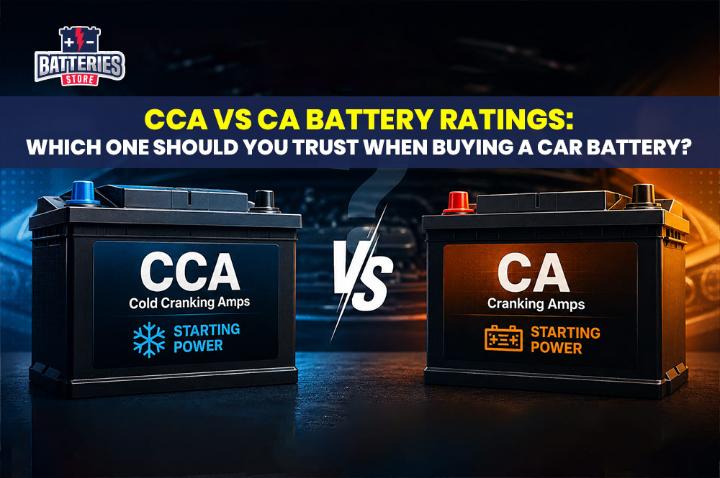
Cranking Amps (CA) and Cold Cranking Amps (CCA) measure a car battery's power delivery in different conditions. CA gauges power at 32°F (0°C) for general starting in moderate climates, while CCA evaluates power at 0°F (-17.8°C).

Because CA is tested at a warmer temperature, it is always a higher number than CCA for the same battery. This distinction matters because some battery labels prominently display the CA rating, which can mislead buyers into thinking they are getting more cold-weather power than they actually are.

Important: Buying a CA rating thinking it's CCA can undersize your battery by 20–30%. In cold weather, the engine may crank slowly or not start at all.

For Canadian drivers, always look for the CCA rating. That is the number that actually reflects your battery's performance in the conditions you face every winter.

You may also encounter MCA (Marine Cranking Amps), which is tested at 32°F (0°C) like CA. If your car needs 500 CCA, a 500 MCA battery may fail in winter. You need an MCA about 20–25% higher than your required CCA for the same cold-start performance.

Rating Comparison at a Glance

Rating
Test Temperature
Best For
Canadian Use?
CCA
0°F / -17.8°C
Cold-weather starting
Yes - always check this
CA
32°F / 0°C
Moderate climates
Not reliable for winter
MCA
32°F / 0°C
Marine applications
Only if 20–25% above CCA need

How Many CCA Do You Need? A Guide for Canadian Drivers

There is no single answer for every vehicle. The right CCA for your car depends on your engine size, vehicle type, and where you live in Canada.

According to the standard recommendation, a car battery should have at least 1 CCA per cubic inch of engine displacement. In the case of diesel engines, the battery should have 2 CCAs per cubic inch, because larger engines or diesel vehicles need batteries with higher CCA ratings.

Your best first step is to check your owner's manual. It will specify the minimum CCA your vehicle needs. Always aim to meet or exceed that number, especially for Canadian winters.

CCA Recommendations by Vehicle Type

Vehicle Type
Recommended CCA
Notes
Small Sedans / Compact Cars
400–600 CCA
Go higher for central/northern Canada
Mid-Size Sedans / Crossovers
500–650 CCA
Higher end if parked outdoors overnight
Full-Size SUVs & Trucks
650–850 CCA
Match displacement and climate
Diesel Trucks / Heavy-Duty
760–1400 CCA
AGM batteries strongly recommended
Motorcycles / Snowmobiles
320–500+ CCA
Follow OEM specs closely

CCA Recommendations by Canadian Province and Climate

Where you live in Canada is just as important as what you drive. For cold areas experiencing temperatures between -20°C and -30°C, a rating of 650 CCA or greater is recommended. This applies directly to most of Canada's populated regions, including the Prairie provinces and Northern Ontario.

Region / Province
Recommended CCA
Notes
BC (Coastal - Vancouver, Victoria)
400–550 CCA
Interior and Northern BC: 600–700 CCA
Alberta (Calgary, Edmonton)
650–800 CCA
Temperatures can drop to -30°C and below
Saskatchewan & Manitoba
700–850 CCA
Some of Canada's coldest urban climates
Ontario (Toronto, Ottawa)
550–700 CCA
Northern ON and Ottawa: 700+ CCA
Quebec (Montreal, Quebec City)
650–800 CCA
Long, harsh winters through March
Atlantic Canada (Halifax)
550–650 CCA
Wet and cold winters
Northern Territories (Yellowknife)
800+ CCA
Replace battery every 2–3 years

What Happens If Your CCA Is Too Low?

Using a battery with insufficient CCA is one of the most common causes of winter breakdowns across Canada. The consequences range from frustrating to dangerous.

Using a battery with a CCA rating lower than recommended is asking for trouble in cold weather. The starter motor is designed to pull a certain amount of current. If the battery cannot supply it due to high internal resistance, the voltage drops quickly. That drop starts a vicious cycle: low voltage makes the starter draw even more current, which pulls voltage down further. The electrical system gets stressed, and the battery itself is forced to work at its limit just to start the engine, which leads to sulfation and rapid wear.

In practical terms, here is what you may experience with a low-CCA battery:

• Your engine cranks slowly, especially on the coldest mornings.

• Eventually, it may not crank at all.

• Sensitive electronics like your infotainment system or keyless entry may behave erratically.

• The battery wears out faster because it is constantly being pushed beyond its limits.

Also, battery strength decreases with time, so installing a battery with more starting power can give drivers more confidence to get through a few tough winters.

Can You Have Too Many Cold Cranking Amps?

This is a fair question, and the short answer is: not really, within reason.

A higher CCA does not push extra power into the car. The car only draws the current it needs. A higher CCA just gives the battery a bigger reserve, keeping voltage stable when the starter or accessories demand a lot.

However, there are practical limits. A higher CCA battery is often physically larger and heavier. If the battery does not fit your battery tray or the terminals are misaligned, it could cause installation problems. It will also cost more money.

Unnecessarily high CCA can increase battery cost with no added benefit in warm climates. So, the goal is to match your CCA to your vehicle and climate, not simply to buy the biggest number on the shelf.

Rule of Thumb: Meet or slightly exceed your manufacturer's minimum CCA recommendation. That balance gives you cold-weather reliability without unnecessary expense.

AGM vs. Standard Lead-Acid Batteries: Which Has Better CCA for Winter?

Battery type matters just as much as a CCA rating, especially in Canada’s extreme cold.

Standard Flooded Lead-Acid Batteries are the most common and affordable option. They provide reliable starting power for most everyday vehicles. However, they are more vulnerable to cold temperatures and tend to lose charge faster when the vehicle sits overnight in extreme cold.

AGM (Absorbent Glass Mat) batteries are a significant upgrade for Canadian winters. One advantage of AGM batteries is their higher Cold Cranking Amps (CCA) rating, which allows vehicles to start more reliably in colder temperatures. Their low self-discharge rate also makes them ideal for long-term storage, as they can sit for months without significant power loss. Compared to traditional lead-acid batteries, AGM batteries hold their charge longer and are less likely to fail in freezing conditions.

AGM batteries are also the preferred choice for modern vehicles with start-stop technology, which requires a battery that can handle frequent charging and discharging cycles.

The Optima SPIRALLCELL design is considered an excellent option for cold weather conditions and high performance. It offers everything an AGM battery does but can stand up to extreme use - a smart choice if you have aftermarket accessories and are demanding on your vehicle's performance.

For most Canadian drivers, an AGM battery with a high CCA rating delivers the best combination of cold-weather performance, longevity, and reliability.

Feature
Standard Lead-Acid
AGM Battery
Cold Weather Performance
Moderate
Excellent
CCA Rating Range
Lower
Higher
Self-Discharge Rate
Higher
Lower
Lifespan in Cold Climates
3–4 years
4–6 years
Cost
Lower
Higher
Best For
Mild climates
Canadian winters

How to Find the Right CCA for Your Vehicle

Finding the correct CCA does not require guesswork. Here are the three most reliable ways to determine it:

Check Your Owner's Manual: Your vehicle's manual will list the minimum CCA requirement. This is your most accurate starting point.

Look at Your Existing Battery: Your current battery's label will show the CCA rating it was built to deliver. If you are replacing it, match or exceed this number.

Use an Online Battery Finder: Most battery retailers, including Batteries Store Canada, offer online tools where you enter your vehicle's year, make, and model to get the correct battery specifications instantly.

Your car's manufacturer typically recommends a specific CCA rating based on the engine size and design. Always refer to your car manual or talk to a trusted auto professional to determine the ideal cold-cranking amps rating for your vehicle.

When in doubt, go slightly higher on the CCA than the minimum requirement. For Canadian winters, that extra margin can make all the difference on a -30°C morning.

How to Test Your Battery's CCA Before Winter

Do not wait until your car refuses to start. Test your battery before the first hard freeze of the season.

Testing your battery's CCA is crucial to ensure it's still performing well, especially before cold weather sets in. Here is how to do it:

• Turn off the engine and all electrical components.

• Connect the positive (red) clamp of a digital CCA tester to the positive battery terminal and the negative (black) clamp to the negative terminal.

• Power on the tester, select CCA mode, and input the battery's voltage rating.

• The tester will display a reading of the battery's voltage and CCA.

If the reading is significantly lower than the battery's rated CCA, it is time for a replacement - before winter, not during it. A battery that tests at 70% or below of its rated CCA in autumn will almost certainly fail by February.

You can also visit an auto shop or battery retailer in Canada. Many offer free CCA testing. A Battery Service Technician can come to you - at work, at home, almost anywhere - to test your battery and find out if it will last through the winter.

Tips to Maximize Your Battery's CCA Performance in Canadian Winters

Park in a Garage When Possible: Even an unheated garage is significantly warmer than the outdoors. This alone can improve your battery's effective CCA on cold mornings.

Use a Battery Trickle Charger or Maintainer: If your vehicle sits for extended periods during winter, connect a smart maintainer. It keeps the battery at optimal charge without overcharging, ensuring full CCA availability every morning.

Turn Off Accessories Before Starting: Before you crank the engine, turn off the heated seats, rear defroster, and interior lights. This reduces the electrical load during startup, giving your CCA more power for starting the engine.

Replace Your Battery Proactively: If you live in a cold environment, it is recommended that you replace your battery every 2–3 years, depending on the size of your vehicle. Do not wait for your battery to fail completely in the middle of winter.

Keep Terminals Clean: Corrosion on battery terminals increases resistance and reduces the effective power delivered by the battery. Clean the terminals regularly with a battery terminal cleaner or a mix of baking soda and water.

Buy a Battery Rated for Your Climate: Always choose a battery rated for your specific region in Canada. Do not buy a battery designed for a mild climate and expect it to survive Prairie winters.

Frequently Asked Questions About CCA

What is a good CCA rating for a car battery in Canada?

For most Canadian drivers, a good CCA rating for winter is at least 650 to 800 CCA, depending on your vehicle. In very cold areas like Northern Alberta or the Territories, aim for 800+ CCA to be safe.

Is a higher CCA always better?

A higher CCA improves cold-weather starting reliability. However, it should still fit your battery tray and match your vehicle's terminal layout. Going far beyond your manufacturer's recommendation offers little practical benefit and adds cost.

Can I use a battery with a higher CCA than recommended?

It is safe to use a battery with CCA slightly above the manufacturer's recommendation. Higher CCA does not push extra power - the car only draws what it needs. Just ensure the physical size and terminal positions match.

How do I know if my battery's CCA is failing?

Slow engine cranking, especially in cold weather, is the most common sign. A professional CCA load test will confirm whether the battery is still performing at its rated capacity.

Does CCA affect my car's electronics?

No. CCA only measures starting power. It does not affect the performance of electrical systems like lights, the stereo, or your infotainment system.

How often should I replace my car battery in Canada?

On average, car batteries last three to five years. Their strength decreases with time. In Canada's harsh winters, consider testing your battery annually after the third year and replacing it proactively.