4D vs 8D Battery Comparison: Size, Capacity, Power and Uses
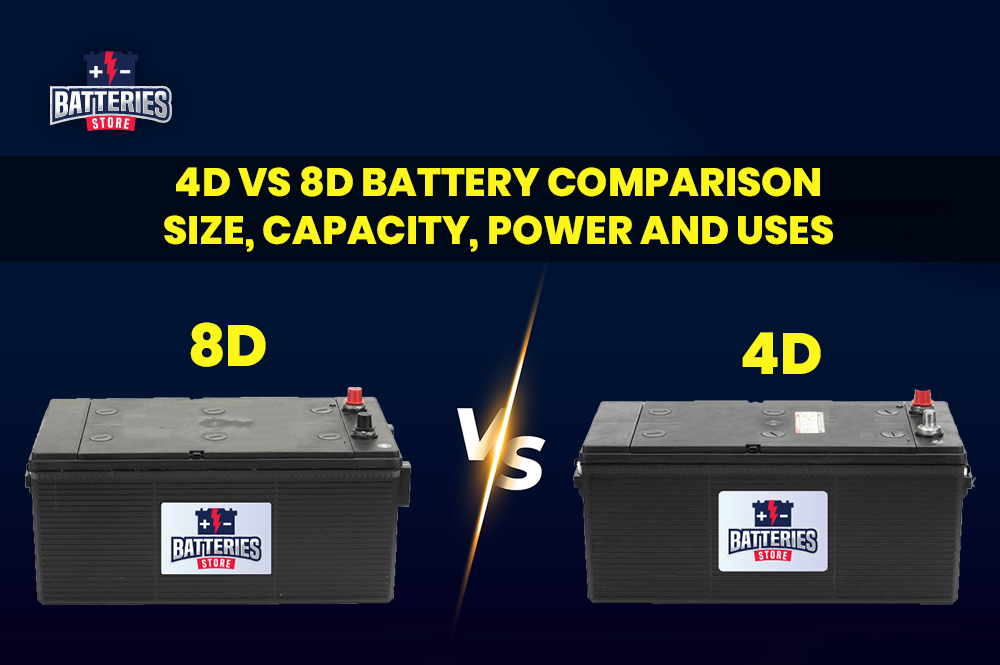
Choosing the right heavy-duty battery is not just about fitment—it’s about reliability, power, and cold-weather performance, especially in a city like Calgary, where winter temperatures can drop well below freezing.
If you’re comparing 4D vs 8D batteries, this guide will help you understand the size differences, power output, real-world uses, and which battery performs better during harsh Canadian winters.
Whether you operate a commercial truck, construction equipment, RV, marine vessel, or backup generator, making the right choice can save you from cold-start failures and costly downtime.
What Is a 4D Battery?
A 4D battery is a large commercial battery designed to deliver dependable starting power for medium-duty vehicles and equipment. It offers a balance between physical size, power output, and cost, making it a common choice across many commercial applications.
In terms of specifications, a typical 4D battery delivers around 160–200 amp-hours of capacity and produces approximately 1,000–1,200 cold cranking amps (CCA). This level of power is sufficient for many diesel engines, provided the battery is well maintained and properly matched to the vehicle’s electrical load.
4D batteries are commonly used in delivery trucks, construction equipment, backup generators, and RVs where space is limited. In Calgary winters, they can perform reliably when vehicles are driven regularly and electrical loads are kept under control.
What Is an 8D Battery?
An 8D battery is the largest standard battery size used in heavy-duty and industrial applications. It is built for maximum power output and extended reserve capacity, making it a preferred choice for vehicles that operate in extreme environments.
Most 8D batteries offer 225–255 amp-hours of capacity and 1,400–1,600 CCA, giving them a significant advantage during cold starts. The larger internal plates and higher electrolyte volume allow 8D batteries to maintain voltage stability even in sub-zero temperatures.
In Calgary, 8D batteries are commonly installed in semi-trucks, snowplows, oilfield equipment, marine vessels, and large RVs. Their ability to handle high electrical demand makes them particularly valuable during long winter idling and overnight cold exposure.
Also read: 8D Battery: Dimensions, Price, Weight and Specifications
4D vs 8D Battery: Side-by-Side Comparison
| Feature | 4D Battery | 8D Battery |
| Physical Size | Smaller | Larger |
| Weight | Lighter | Heavier |
| Amp-Hour Capacity | Medium | High |
| Cold Cranking Amps | Good | Excellent |
| Reserve Capacity | Moderate | Long-lasting |
| Winter Performance | Reliable | Superior |
| Typical Cost | Lower | Higher |
This difference becomes especially noticeable during cold starts in Calgary winters, where higher CCA and reserve capacity matter the most.
Power & Performance Differences Explained
The biggest difference between 4D and 8D batteries is how much energy they can deliver and for how long.
8D batteries offer advantages such as:
- Stronger cold-start performance in sub-zero temperatures
- Better support for heaters, inverters, and onboard electronics
- Reduced strain on the battery during long idle periods
4D batteries perform well when:
- Electrical load is moderate
- Vehicles are driven frequently
- Battery space is limited
For winter-heavy operations, fleets often prefer two 8D batteries in parallel for maximum reliability.
How Do Recharge Times Compare Between 4D and 8D Batteries?
Recharge time depends less on the battery size itself and more on the charging system capacity, alternator output, and depth of discharge. That said, because 8D batteries have higher amp-hour capacity, they naturally take longer to fully recharge than 4D batteries when using the same charging source.
In practical terms, a 4D battery reaches full charge faster because it stores less total energy. An 8D battery requires more charging current and longer run time to recover, especially after deep discharge during cold starts or extended idling.
In Calgary winters, short trips can be a challenge for 8D batteries if the alternator does not have enough time to replenish the charge. This is why many commercial vehicles use high-output alternators or dual-battery setups to ensure proper charging in cold weather.
Recommended Depth of Discharge (DoD) for 4D and 8D Batteries
Depth of discharge plays a major role in battery longevity. Both 4D and 8D batteries—especially when used for starting or hybrid applications—perform best when they are not deeply discharged on a regular basis.
For most lead-acid 4D and 8D batteries, the recommended DoD is no more than 50% during normal operation. Keeping discharge shallow helps preserve internal plate integrity and reduces sulfation.
In cold climates like Calgary, maintaining a higher state of charge is even more important. As temperatures drop, available capacity decreases, meaning a battery that is already deeply discharged may struggle to start an engine.
Lifespan and Cycle Life: 4D vs 8D Batteries
When comparing lifespan and cycle life, 8D batteries generally have an advantage due to their larger internal structure and lower operating stress. Because an 8D battery delivers more power with less strain per start, it typically experiences slower degradation in heavy-duty applications.
A 4D battery, while reliable, operates closer to its performance limits in high-load or extreme cold conditions. This can result in a shorter cycle life if the battery is frequently discharged deeply or exposed to prolonged freezing temperatures.
That said, real-world lifespan depends on:
- Charging system health
- Operating temperature
- Depth of discharge
- Frequency of use
- Maintenance and testing
In Calgary, where winter conditions are severe, 8D batteries often outlast 4D batteries in commercial trucks and equipment simply because they are better suited for the environment.
Which Battery Is Right for Your Application?
A 4D battery is best suited for medium-duty vehicles, equipment with limited battery tray space, and applications where electrical demand is moderate. It offers a practical balance between performance and cost.
An 8D battery is the better option for heavy-duty trucks, high-load electrical systems, and vehicles that operate daily in harsh winter conditions. When downtime is costly, the added reliability of an 8D battery becomes a worthwhile investment.
Can You Upgrade from a 4D to an 8D Battery?
Upgrading from a 4D to an 8D battery is possible, but it requires careful evaluation. The battery tray must accommodate the larger size, cables may need adjustment, and the mounting system must support the added weight. For commercial vehicles, professional assessment ensures safe installation and optimal performance.
Battery Lifespan: 4D vs 8D
Battery lifespan depends on usage, charging system health, and exposure to extreme temperatures. In demanding applications, 8D batteries typically last longer because they experience less strain during starts and high electrical load. In moderate-duty use, a well-maintained 4D battery can still deliver years of reliable service.
Regular battery testing before winter is one of the most effective ways to extend lifespan, regardless of battery size.
Conclusion
If your vehicle operates occasionally, has moderate electrical needs, and is stored indoors, a 4D battery can be sufficient. However, for Calgary drivers who face extreme cold, heavy electrical loads, or commercial usage, an 8D battery provides superior winter reliability and long-term value.
Stay Winter-Ready with Batteries Store
Batteries Store help you choose the right battery for real winter conditions, not just what fits on paper.
We offer expert battery testing, professional recommendations, heavy-duty 4D and 8D batteries in stock, and fast installation support. Whether you operate a single vehicle or manage a fleet, our team ensures you’re prepared before winter causes problems.
Contact Batteries Store in Calgary, Regina and Red Deer.