Car Battery Dies Overnight in Cold Weather? Guide for Canadian Drivers
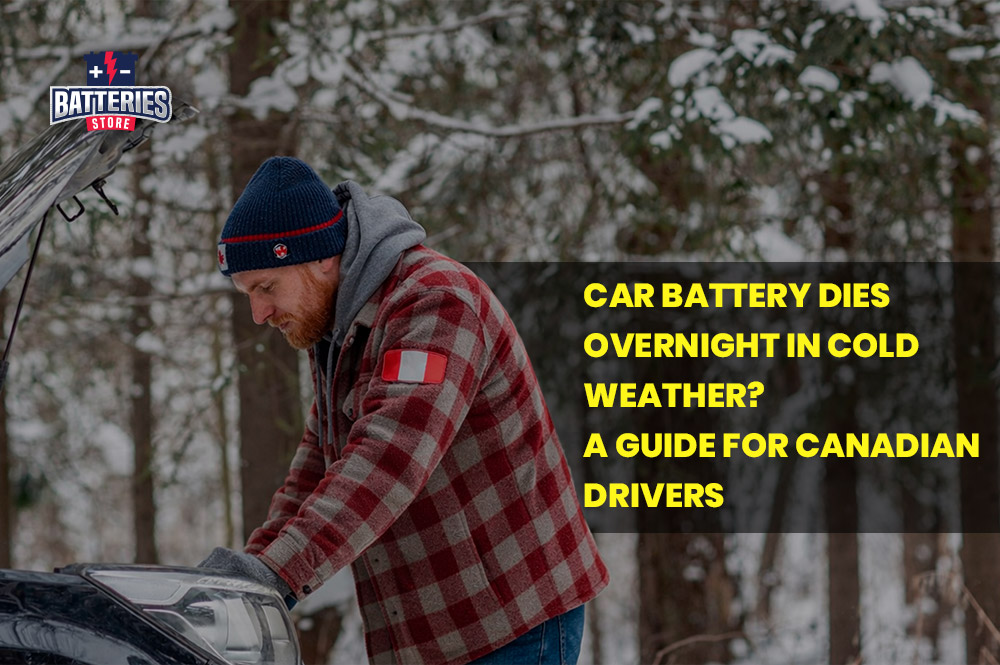
If your car battery dies overnight in cold weather, you’re not alone. Canadian winters, especially in cities like Calgary, create some of the harshest driving conditions in North America. Temperatures often plunge to –25°C, –30°C or even lower. The cold slows battery chemistry, thickens engine oil, increases electrical resistance and turns a healthy battery into a dead one the next morning.
Whether your vehicle is parked outside, used only for short trips or running an older battery, cold weather can expose every weakness. This guide explains exactly why car batteries die overnight, how to recognize early failure signs, how to protect your battery in freezing conditions, and which winter-ready batteries perform best in Canada.
Why Car Batteries Die Overnight in Cold Weather
Car batteries rely on chemical reactions to generate electricity, and those reactions slow dramatically in freezing temperatures. At –18°C a battery may deliver only half of its normal power. Meanwhile, the engine requires nearly double the power to start because the oil becomes thicker.
When your battery has reduced power and your engine needs more power at the same time, a no-start situation becomes very likely.
What cold weather does to your battery:
- It slows internal chemical activity
- It thickens engine oil and makes the starter work harder
- It increases electrical load from heaters, lights and defrosters
- It reduces the battery’s ability to recharge fully
- It increases the freezing risk of partially charged batteries
A fully charged battery freezes around –55°C, but a low-charge battery can freeze near –15°C — temperatures Calgary regularly experiences in winter.
Signs Your Battery Is Struggling Before It Dies Overnight
Most batteries warn you before they fail. Cold weather simply makes the symptoms worse.
You may notice:
- Slow cranking or a clicking noise when starting
- Dim headlights or flickering interior lights
- Electrical systems resetting, such as clock or radio memory
- Battery light glowing on the dashboard
- A strong sulfur or rotten-egg smell from the battery
- The car starting fine during the day but failing after sitting overnight
These are signs that your battery can no longer maintain adequate charge.
What Happens to Your Battery Overnight in Freezing Temperatures
When your vehicle sits outside overnight in extreme cold, the battery gradually loses capacity. The electrolyte thickens and internal resistance increases, making it harder to supply current to the starter.
If your battery is already weak, partially charged or aging, the cold will drain its remaining power and stop your car from starting in the morning.
Repeated overnight failures mean the battery no longer holds charge and needs professional testing.
Parasitic Drain: A Hidden Reason Batteries Die Overnight
Beyond cold temperature effects, your battery can also die overnight due to a parasitic drain — a small but continuous power draw even when the car is off.
Normal drains include:
- Security system
- Clock
- Memory modules
Abnormal drains may come from:
- Faulty wiring
- Interior lights staying on
- A failing relay
- A malfunctioning infotainment system
- Dash cams or phone chargers left plugged in
Cold weather magnifies these drains, increasing the chances of overnight failure.
Battery Age and Condition: Most Common Cause of Overnight Failure
Cold weather exposes weak batteries instantly. Most car batteries last three to five years, but Calgary’s temperature swings shorten that lifespan. If your battery is older than three years, its ability to hold charge drops significantly.
Old batteries may perform fine in summer but fail suddenly during cold months. Cold weather simply reveals the battery’s true condition.
How to Keep Your Battery From Dying Overnight in Winter
Canadian drivers can significantly reduce battery failures by taking a few preventive steps. These solutions help maintain temperature, reduce strain and keep the battery charged.
Park in a garage or sheltered area
A warmer environment can raise the battery temperature by 10–15°C, which dramatically improves performance. If no garage is available, parking near buildings or sheltered areas reduces wind chill.
Use an engine block heater
Block heaters warm the engine oil, helping your car start more easily. This reduces the strain on your battery during cold starts.
Install a battery blanket or warmer
A battery blanket wraps around the battery and uses gentle heat to maintain a stable temperature. It is one of the most effective winter tools in Alberta’s climate.
Avoid frequent short trips
Short trips don’t give the alternator enough time to recharge the battery. Longer drives help maintain a full charge.
Reduce overnight electrical load
Unplug accessories, turn off interior lights and avoid leaving devices connected. Even small draws can drain a cold battery.
Keep terminals clean
Corrosion increases resistance and reduces power flow. Clean terminals help the battery deliver every available amp during cold starts.
Store the battery indoors during extreme cold
If the vehicle won’t be used for several days during severe cold snaps, removing the battery and storing it indoors can help prevent freezing. This is not required for daily driving but can be helpful in extreme scenarios.
You might also like: How to Keep Car Battery Warm in Winter
Best Car Batteries for Cold Weather in Canada
If your battery repeatedly dies overnight, it may be time to upgrade. Not all batteries perform equally in harsh winter conditions. Choosing the right battery makes a significant difference.
AGM (Absorbent Glass Mat) batteries
AGM batteries are ideal for Canadian winters because they offer:
- Higher cold-cranking amps (CCA)
- Faster recharge
- Better resistance to freezing
- More durability and vibration resistance
AGM is the top choice for cold climates.
High-CCA batteries
For Calgary conditions, look for:
- 700–900 CCA for cars
- 900–1050+ CCA for trucks and SUVs
High CCA ensures strong starts on the coldest mornings.
Lithium batteries
Lithium batteries perform extremely well in warm seasons but struggle below –10°C
unless they include built-in heating. They are not recommended as primary winter starting batteries in Alberta.
Traditional lead-acid batteries
Conventional batteries freeze more easily, provide lower power in cold weather and require more maintenance. They are not the best option for repeated cold-weather starting.
Winter Battery Maintenance Tips to Prevent Morning Failures
Keeping your battery maintained can significantly reduce the chance of overnight failure.
- Maintain a full charge: A fully charged battery resists freezing much better.
- Test your battery before winter: A quick test can reveal weak cells long before failure occurs.
- Keep a booster pack in the vehicle: A portable jump starter is essential for winter emergencies.
- Replace weak batteries early: If your battery is older or repeatedly dying, replacement is the safest choice before deep winter hits.
How to Jump-Start a Dead Battery Safely in Cold Weather
Jump-starting in winter requires caution. Batteries can swell or crack when frozen.
Before boosting:
- Inspect the battery
- Connect cables carefully
- Allow the donor vehicle to run for a few minutes
If the battery shows signs of freezing, boosting may be dangerous.
When to Replace Your Battery Instead of Recharging It
You should replace the battery if:
- It is older than five years
- It swells or freezes
- It dies repeatedly overnight
- Voltage drops below 12.2V after sitting
- You are jump-starting it frequently
Calgary’s cold accelerates battery aging, so early replacement can prevent winter emergencies.
Where to Buy Winter-Ready Car Batteries in Calgary
Cold weather demands specific battery features like higher CCA and AGM technology. Choose a store that understands Calgary’s climate and carries batteries rated for –30°C and colder.
Batteries Store offers winter-ready AGM and high-CCA batteries built specifically for harsh Canadian conditions.
Conclusion
Keeping a car battery healthy in winter requires a combination of proper maintenance, the right battery type and awareness of early failure signs. Small actions like parking indoors, using a battery blanket and keeping terminals clean can significantly improve reliability. Choosing a high-quality winter battery is equally important.
Stay ahead of cold-weather failures with professional testing and timely replacement.
Need a Winter-Ready Battery or Free Battery Test in Calgary?
Batteries Store offers:
- High-CCA winter batteries
- Durable AGM batteries
- FREE in-store battery testing
- Fast battery replacement
- Expert guidance tailored to Calgary’s winter conditions
Stay powered and confident this winter.
Visit Batteries Store Calgary today for professional support and reliable winter battery solutions.
Read the Next Blog: Free Battery Testing in Calgary: Know If Your Car Battery Is Dead