What Happens If You Install the Wrong Car Battery? Common Problems
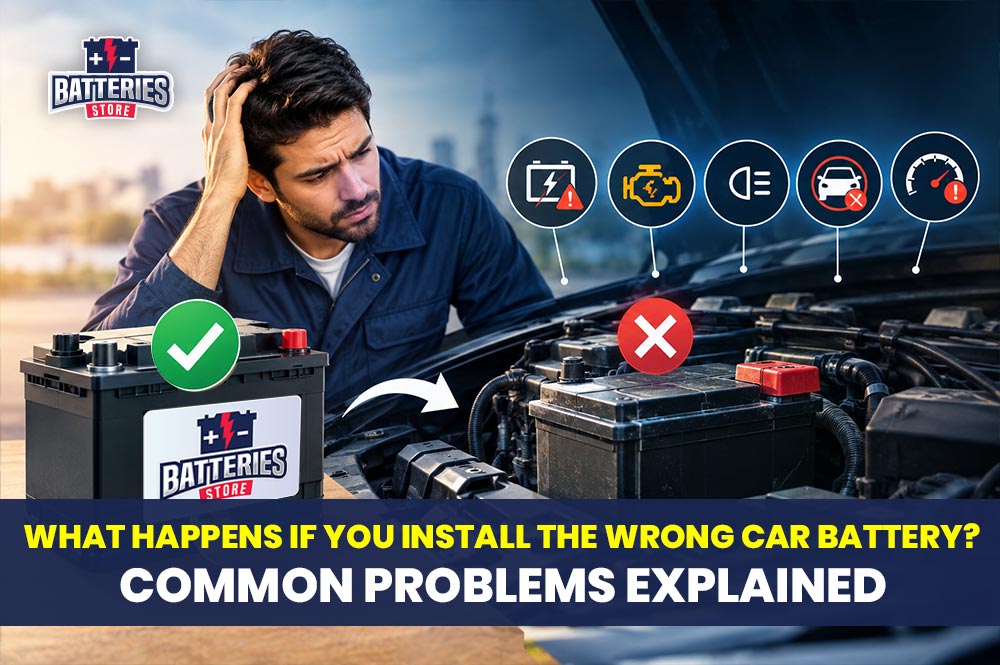
Choosing a replacement battery can look simple. Find one that fits, connect the terminals, and start the car. However, battery compatibility involves much more than physical size.
Install the Wrong Car Battery Problems can range from poor cold starts to electrical issues and shortened battery life. In some cases, an incorrect terminal layout can even create a short-circuit risk.
Understanding what your vehicle actually needs can save you from buying twice.
What Does the “Wrong Car Battery” Actually Mean?
A battery can fit inside the tray and still be unsuitable for your vehicle.
The correct replacement depends on several specifications. These include voltage, battery type, physical dimensions, terminal configuration, CCA, and capacity. The BCI group number can identify physical size, hold-down design, and terminal arrangement.
For example, imagine two batteries that look almost identical. One matches your vehicle's required CCA and terminal layout. The other provides less cold-starting power. Both may start the vehicle on a mild afternoon, but their performance can differ when winter arrives.
Therefore, physical fit alone does not confirm compatibility.
Install the Wrong Car Battery: Problems You May Notice First
An unsuitable battery may not fail immediately. That can make the problem harder to recognize.
A driver may notice slower cranking or inconsistent starting as conditions become more demanding. An incorrect battery type can also affect electrical system performance and battery service life.
Your Car Starts, So Is the Battery Fine?
Not necessarily.
Starting once only shows that the battery supplied enough power at that moment. Temperature, electrical demand, battery charge, and driving conditions can change that equation.
This matters in Canada because cold-weather starting places greater importance on CCA. AAA advises against choosing a battery with specifications below the vehicle's original requirements.
Can the Wrong Battery Affect the Charging System?
Modern vehicles can manage battery charging electronically. As a result, battery replacement is no longer purely mechanical on every car.
Some vehicles require a replacement battery to be registered or coded. If the battery technology or capacity is entered incorrectly, the Battery Management System may use an unsuitable charging strategy.
Therefore, checking the vehicle manufacturer's replacement procedure matters, especially on newer models.
Install the Wrong Car Battery Problems in Canadian Winters
A marginal battery can seem acceptable during warmer weather. A freezing Canadian morning can expose its limitations.
Cold Cranking Amps measure a battery's ability to provide starting current under cold test conditions. Using a battery below the automaker's recommended CCA can increase the risk of poor cold-weather starting.
For a Canadian driver, CCA should therefore be checked against the manufacturer's specification rather than chosen by price alone.
AGM vs Flooded Battery: Can You Install the Wrong Type?
Battery chemistry also matters.
Many vehicles use conventional flooded batteries. Others use Enhanced Flooded Batteries (EFB) or Absorbent Glass Mat (AGM) technology, particularly when start-stop systems or greater electrical demands are involved.
A vehicle designed around AGM technology should not simply receive a conventional flooded battery because it costs less. VARTA notes that vehicles designed for AGM in advanced start-stop applications should receive AGM replacements. Using incorrect technology can affect start-stop operation, comfort functions, and battery life.
Read Also: What Is AGM Battery and How Long Does It Last?
Wrong Battery Size and Terminal Position Can Create Bigger Problems
Battery dimensions are not only about fitting inside the engine bay.
The battery must sit securely in its tray. The hold-down hardware must also secure it correctly. Excessive vibration can physically damage internal battery components over time.
Terminal position matters too. An incorrect layout can strain cables or create clearance problems. In serious cases, an unsuitable terminal location may create a short-circuit risk with nearby components.
Never force cables to reach a battery terminal.
Start-Stop Vehicles Make Battery Choice More Important
Start-stop vehicles repeatedly switch the engine off and restart it during normal driving. Their batteries must handle frequent cycling while continuing to support electrical equipment.
That is why many start-stop vehicles use EFB or AGM batteries. Installing a conventional starter battery where the vehicle requires a more capable technology can lead to reduced battery life or start-stop system limitations.
Always check the owner's manual or manufacturer specification before changing battery technology.
Read Also: AGM vs Lead-Acid Batteries: Which Performs Better in Cold Weather
How to Avoid Install the Wrong Car Battery Problems
Start with your vehicle manufacturer's battery specifications rather than guessing from appearance.
Confirm the required voltage, group size, terminal orientation, battery technology, CCA, and relevant capacity rating. Also check whether your vehicle requires battery registration after replacement.
If you are unsure, use your vehicle's year, make, model, engine, and original battery specifications to confirm compatibility before purchasing.
Already Installed the Wrong Battery? What Should You Do?
Do not wait for the first no-start morning.
Compare the installed battery with your vehicle manufacturer's requirements. Check its size, technology, CCA, capacity, terminal configuration, and mounting.
If anything does not match, have the battery and charging system checked. Modern vehicles may also need confirmation that battery registration was completed correctly.
Choose the Right Car Battery the First Time
A good replacement battery is not simply the one with the lowest price or biggest number on the label. It is the battery designed to meet your vehicle's actual requirements.
The right fit can support dependable starting, proper electrical operation, and longer battery service life.
Batteries Store supplies automotive batteries alongside other vehicle and equipment battery categories across its Canadian locations. Batteries Store Before replacing your battery, confirm the specifications and choose the right match for your vehicle.